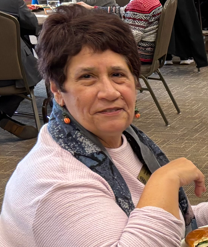
Grace, a practicing attorney in Adrian who works in The Friend of the Court’s office and is a board member of this club, shared with the audience “What I do all day!” Grace said she graduated from John Marshall Law School in Chicago in 1981. She moved to Adrian in 1986 and began in private practice in 1987 until 2020 when COVID termed her and other attorneys across the country “non-essential”, she said, so she “locked her doors”.
Grace’s current official title is Domestic Relations Referee. Grace said that among the things she does not do is: give legal advice, does not pull everyone’s file at random to see if they’re having troubles to see if someone needs Grace to represent them, she does not pocket any child support, nor does she get a commission on the amount that is owed or paid.
What Grace does do, she said, in this quasi-judicial position, is participate in evidentiary hearings. So, when people come in for hearings, they can either represent themselves or they can elect to be represented by an attorney. She will hear matters of child custody, child support, parenting time, matters of spousal support, change of domicile, and everything in between (i.e. who can cut their hair, nails, who can take them to certain events, etc.)!
Petitions are generally filed by somebody, she said, and if there are attorneys present, they are generally prepared and they know what to do when they come in for a hearing. Those who represent themselves, however, are the more challenging ones because they don’t understand what their obligation is and want that explained to them, need some form of legal advice or they “just get mad at me” because they can’t afford a lawyer and they have no idea what to do. Unfortunately, there are no special rules, she said. Yet, she has to follow the law and many people do not like that! Grace said she decides "questions of fact and questions of law".
Just today, Grace said, she had three hearings on her docket. She usually has between 3-5 hearings any given day. Following each hearing she has to draft her orders. For example, she had a hearing on child support where she needed to take the person’s testimony on which she bases her decision – as well as on the evidence, she said.
On support hearings, she handles things a bit differently, she said, by getting basic information (i.e. marital status, etc.) but still needs to get their testimonies (i.e. where they work, what do they earn, YTD income, etc.) and then she applies the child support formula to that and will draft an order that then goes up to the judge for their signature. If people don’t like what Grace does, they all have a right to object to her order and ask for a hearing before the Circuit Court judge for an appeal.
Grace’s other hearings this morning were on child custody, and then on parenting time that involved CPS and was a bit more serious. Grace said that writing up her “findings” was very time consuming in all matters she deals with. She writes them as succinctly as she can for ease of understanding and then goes about drafting the orders.
On occasion, she said, she has to interview children. When doing so, the meeting is video recorded without anyone else present (i.e. no parents, attorneys, etc.) Some of her hearings are in person while some occur virtually. Grace said that either way, she is stunned sometime by the level of disrespect that she is shown especially those handled virtually. Some have even resorted to swearing and throwing their computers! And, all this occurs, she said, BEFORE she even makes her decision!!
Grace said that there is one other attorney at The Friend of the Court who does what she does three days a week.
Thanks, Grace for a most interesting presentation. Now we know what you do!!










.png)